

Lethal Means Safety
Why Is Secure Storage Important?
While some people may struggle with suicidal thoughts for weeks, months, or even years, many attempts happen shortly after a crisis.
That’s why it’s important to remove anything from someone’s environment that they could use to harm themselves.
See below recommendations and resources.
Why is There an Emphasis Firearm Safe Storage?
The secure storage of firearms protects young people from both accidental and intentional gun violence.
Research has found that:
More than 75% of firearms used in youth suicide attempts and unintentional firearm injuries came from the residence of the victim, a relative, or a friend.
3 out of 4 children know the location of their parent’s gun in the home. 1 in 3 of these children admitted to handling the gun unsupervised.
According to the American Academy of Pediatrics, hundreds of child and adolescent deaths by firearm could be prevented each year with safe and secure storage practices.
In North Dakota, firearms are the most common way people die by suicide.
Lethal Means Safety Recommendations from the American Academy of Pediatrics (healthychildren.org)
Firearms
o Store firearms outside of the home (if you have any). This is the most effective way to prevent unintentional gun injuries, suicide and homicide to children and adolescents.
o If you decide to keep guns in the home, teaching kids about gun safety, or to not touch a firearm if they find one is always a good idea, is not enough to prevent a tragedy from occurring.
o Follow these important safety rules to reduce the chances of children being injured:
- All guns in your home should be locked and unloaded, with ammunition locked separately. (ND THRIVES offers free lethal means safety materials, see below).
- Make sure children and teens can’t access the keys or combinations to lock boxes or gun safes.
- Do not keep loaded, unlocked guns in the car, or anywhere else on your property.
- Ask other parents if they have unlocked guns in their home to keep your kids safe while they are playing at their home. Talking with other parents about gun violence can help prevent it.
Medications and Other Substances
o Purchase and keep all medicines in containers with safety caps but know that safety caps are designed to be child resistant but are not fully child proof.
o Lock up all medicine, cleaning and laundry products (including detergent packets), paints/varnishes and pesticides out of sight and reach of children but maintain these items in their original packaging.
o Lock up alcohol and drugs, not only because they can be toxic, but they also impair judgement.
o Discard unused medication. Many pharmacies and police departments offer free medication disposal.
o Safety latches on cabinet doors are not foolproof. The safest place to store poisonous products is somewhere a child can’t see or reach..
o Poison Control 1-800-222-1222 is available for all poison emergencies and questions. Do not wait for symptoms to appear. Poison experts are available 24/7.
Firearm Storage & Safety Devices

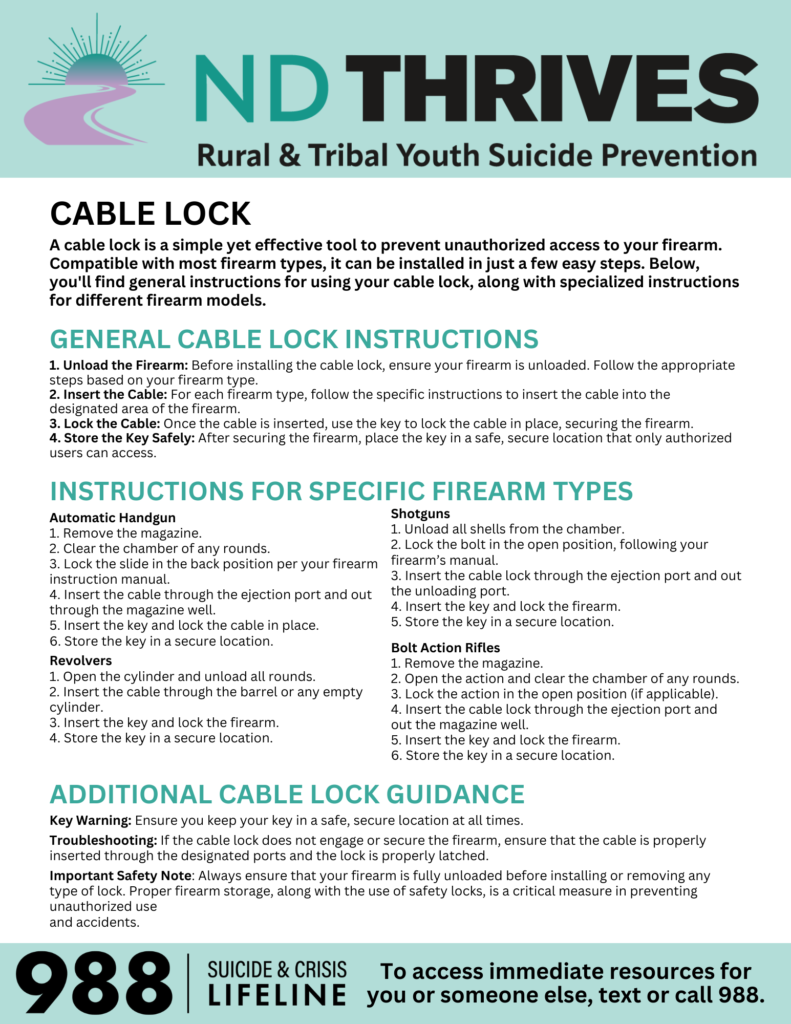
Cable Lock Instructions
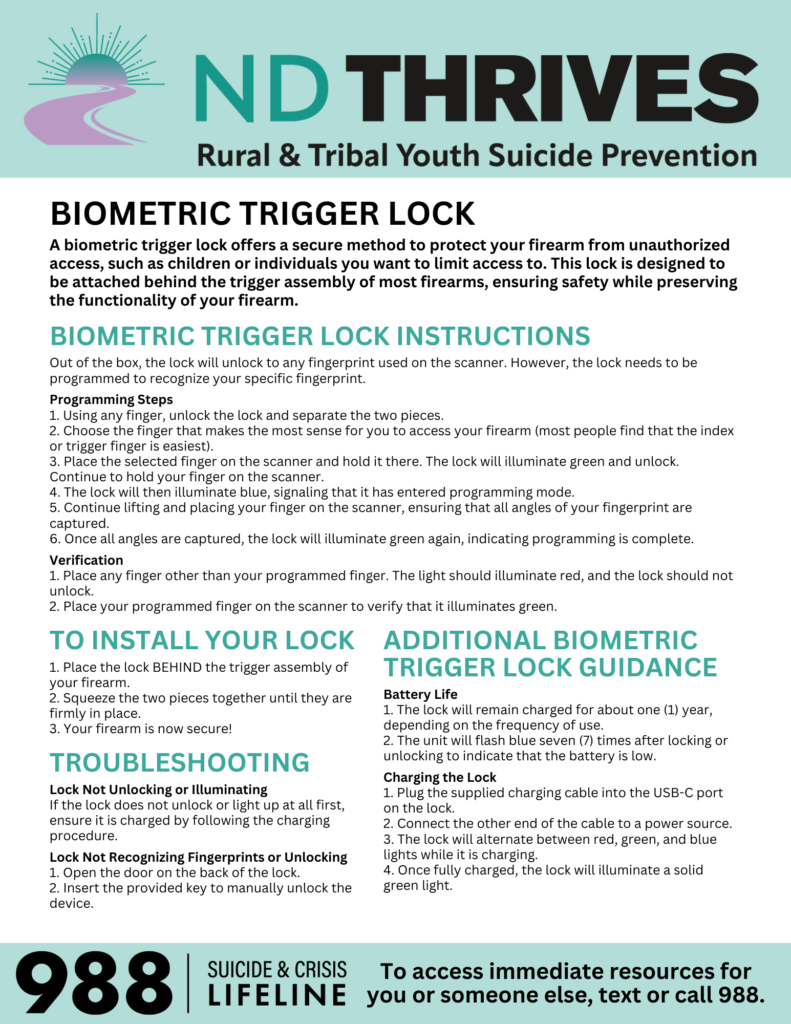
Biometric Trigger Lock Instructions
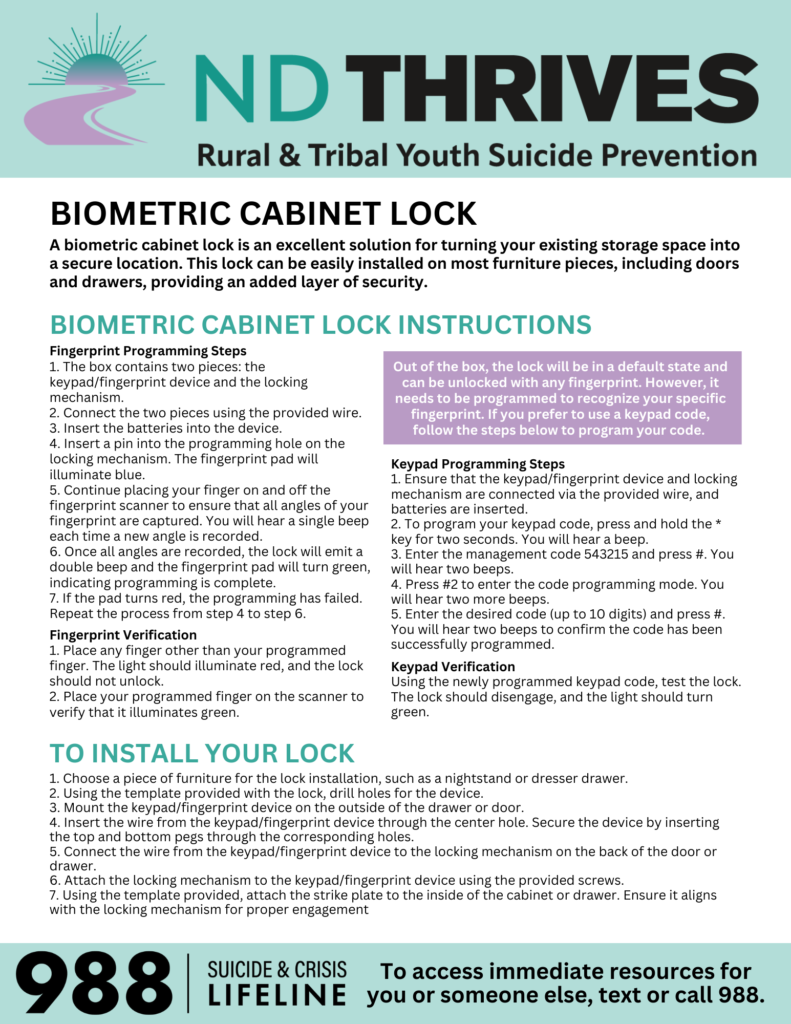
Biometric Cabinet Lock Instructions
Approaching Conversations Around Firearm Safety
Be direct, empathetic, and respectful.
Lead with shared goals: keeping kids safe! Every parent wants their child to be safe at home, and understanding this shared goal can build trust.
Explain how easy access to lethal means increases youth suicide risk.
Discuss available options for safe storage of lethal means, and explore barriers to various options.
Other Ways to Stay Safe
Prescription medication and pills: These can be given to a parent, caregiver, or trusted person to lock up safely or brought to a pharmacy or police department for disposal.
Ropes: Remove these from the home during periods of increased risk.
Sharp objects (razors, knives, scissors, etc.): Remove from the daily environment. Ask for help from family members to supervise use of any of these sharp objects.